Blog Description

Fraccing With Two C's is a blog focused on the highly controversial topic of hydraulic fracturing stimulation in the oil and gas industry. The title of this blog stems from the slang term for hydraulic fracturing as it is spelled in the oil and gas industry, which differs from that commonly used in the media and by the general public, 'fracking'. Fracture stimulation is also commonly referred to as fracing, but at Colorado School of Mines the Petroleum Engineering Department generally spells the slang term with two c's.

This blog will address some of the concerns, misconceptions, and recent news on this topic. Though personal opinions are present, we will remain factual and provide evidence for all discussions. We welcome comments of all sorts, whether they agree or disagree with our opinions, as long as they are appropriate for a classroom setting, since this is a project for a science communication course.
Showing posts with label Wyoming. Show all posts

Friday, November 2, 2012

Is There More to Worry about in Pavillion?


Over the past couple weeks Aubrey and I have been posting about the controversies that have come up in the town of Pavillion, Wyoming.  The previous posts were concerned with the water contamination and finding the source of the contamination, but is water contamination the only concern that residents have in Pavillion?  Many of the residents of Pavillion have also been making complaints about the possibility of poor air quality.  To investigate these claims EnCana Oil put a mobile monitoring station in the town of Pavillion.
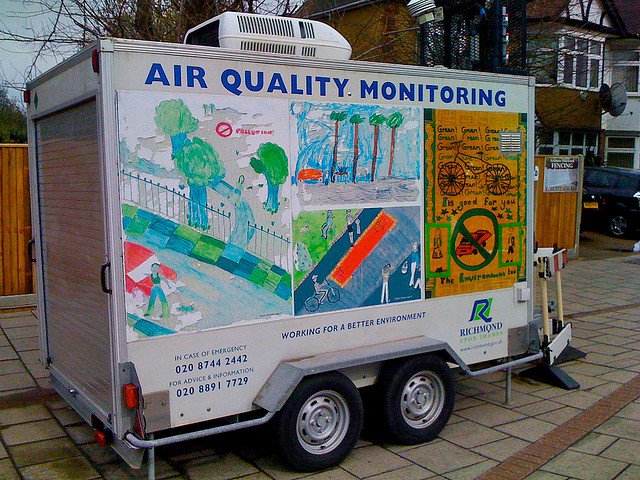

The mobile monitoring station placed in Pavillion measures the levels of nitrogen oxides, hydrocarbons, particulate matter and ozone to figure out a level of air quality.  The station measured the air quality from January 2011 through March 2012.  After analyzing the data, none of the levels exceeded any of the standards for air quality monitored by the U.S. Environmental Protection Agency.  The only level of air quality that came close to being a concern was ozone which still remained under the legal limit.


Many of the residents were outraged to find out the results of the tests and said that they did not get a fair sample of air to test.  Residents believed the test was unfair because the mobile monitoring station was placed on a hill that was about 20 feet in elevation above the well field. 

Representatives claimed that they careful chose the location for the mobile monitoring station and took many factors into account including wind direction, access to electricity, and topography in order to choose the best location.  Even though the results of the testing say otherwise, the residents of Pavillion believe something is wrong with their air quality and future testing will likely be done.  No testing is currently going on because all of the mobile monitoring stations owned by EnCana are already in use at other sites.

-Adam

Thursday, October 25, 2012

More on Pavilion, WY

Last week Adam wrote a post about the water contamination in Pavilion, Wyoming. This post contained a lot of information and summarized much of what the report said; however, because of the length of this report and the significant amount of information it entailed, I would like to add onto what Adam said and give more information regarding the report.


People in Pavilion had noticed a foul taste and smell to their drinking water, so they notified the Environmental Protection Agency (EPA) about this and complained until they said they would come out and conduct a study. In this study, many hydrocarbons and other compounds that can be related to hydraulic fracturing and natural gas production were found in the soil as well as the water.

These compounds were found to most likely be from hydraulic fracturing and surface pits used during drilling. When a well is drilled, surface pits are used for drilling wastes and produced and flowback waters. These are usually man made and should be cleaned up once the well has been drilled.

So this may make hydraulic fracturing sound like a horrible process and encourage us to discontinue it. However, there is more to consider while reading this report.

First, these wells were drilled in the 1950's. Much has changed since then including drilling technology and certain standards needing to be met. Information was lacking in the well design of these wells in Pavilion, so it is hard to know exactly how they were drilled.  Secondly, these wells were only a few hundred feet beneath the surface. In my research, I have never heard of a single well being that shallow. From my experience working at BP America this summer, each of the wells we discussed were all a few thousand feet beneath the surface. Because the wells in Pavilion are so shallow, it is a lot easier for methane and other hydrocarbons to migrate to the water table. Third, the surface casing of these wells "do not extend below the maximum depth of domestic wells in the area of investigation." This goes along with the shallowness of these wells. Finally, there is no baseline information to compare the results from this study to what would have been before hydraulic fracturing occurred.

Overall, these downfalls related to hydraulic fracturing are easy to fix. Simply drill deeper wells to avoid the effects hydraulic fracturing had here.

Currently the EPA is working on getting the water and soil in Pavilion cleaned up. It is difficult to get the funding because there is still no proof of the exact source of these compounds.

I realize this post is long. There is merely too much to say and too little room to say it. If there is any questions about anything that I said, feel free to ask.

-Aubrey Bagley

Saturday, October 20, 2012

What was Going on in Pavillion, Wyoming?


Could you imagine living in a small town where you know something is wrong with your water supply, but unsure to the reason why and how serious of a problem it is?  This is what happened in a town named Pavillion, Wyoming where the individuals of the town had to fight long and hard to get noticed for a case study to be done on the water supply. 


Individuals sent in complaints once they realized the water supply had some foul qualities and this sparked an investigation into the quality of the water headed up by the EPA Region 8.  John Hanger, a nationally recognized expert on environment and energy, review the report given by the EPA and claims that the report implies a direct connection to contamination from hydraulic fraccing and natural gas extraction.  The contamination was so great that the Agency for Toxic Substances and Disease Registry, or ATSDR, advised all of the individuals with contaminated water to use other sources of water for cooking and drinking and when an individual is showering to make sure the room is ventilated. 


Shortly after the report was released by the EPA, EnCana Natural Gas began to come out with statements defending their projects.  EnCana was the only natural gas company with extracting projects in Pavillion and claimed that the EPA reports has no evidence that the contamination came from hydraulic fraccing and that the report is only implying the accusation.  EnCana also pointed out that the findings released by the EPA were not reviewed by qualified third party individuals which are important to determining the true cause of the contamination. 

Even though the findings cannot prove that the hydraulic fraccing is the source of the contamination, the EPA is working with EnCana to make sure all of the individuals living in Pavillion, Wyoming have a clean water supply.  Today the town of Pavillion is being considered for the National Priorities List which is a list of waste sites eligible for clean up financed by the federal Superfund program.

-Adam