Blog Description

Fraccing With Two C's is a blog focused on the highly controversial topic of hydraulic fracturing stimulation in the oil and gas industry. The title of this blog stems from the slang term for hydraulic fracturing as it is spelled in the oil and gas industry, which differs from that commonly used in the media and by the general public, 'fracking'. Fracture stimulation is also commonly referred to as fracing, but at Colorado School of Mines the Petroleum Engineering Department generally spells the slang term with two c's.

This blog will address some of the concerns, misconceptions, and recent news on this topic. Though personal opinions are present, we will remain factual and provide evidence for all discussions. We welcome comments of all sorts, whether they agree or disagree with our opinions, as long as they are appropriate for a classroom setting, since this is a project for a science communication course.

Friday, November 2, 2012

Is There More to Worry about in Pavillion?


Over the past couple weeks Aubrey and I have been posting about the controversies that have come up in the town of Pavillion, Wyoming.  The previous posts were concerned with the water contamination and finding the source of the contamination, but is water contamination the only concern that residents have in Pavillion?  Many of the residents of Pavillion have also been making complaints about the possibility of poor air quality.  To investigate these claims EnCana Oil put a mobile monitoring station in the town of Pavillion.
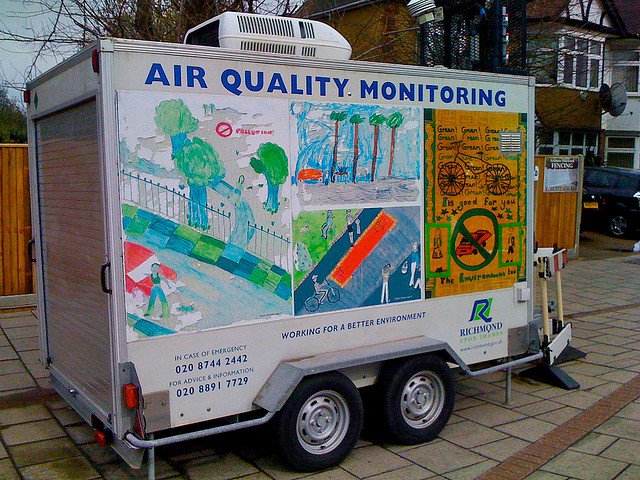

The mobile monitoring station placed in Pavillion measures the levels of nitrogen oxides, hydrocarbons, particulate matter and ozone to figure out a level of air quality.  The station measured the air quality from January 2011 through March 2012.  After analyzing the data, none of the levels exceeded any of the standards for air quality monitored by the U.S. Environmental Protection Agency.  The only level of air quality that came close to being a concern was ozone which still remained under the legal limit.


Many of the residents were outraged to find out the results of the tests and said that they did not get a fair sample of air to test.  Residents believed the test was unfair because the mobile monitoring station was placed on a hill that was about 20 feet in elevation above the well field. 

Representatives claimed that they careful chose the location for the mobile monitoring station and took many factors into account including wind direction, access to electricity, and topography in order to choose the best location.  Even though the results of the testing say otherwise, the residents of Pavillion believe something is wrong with their air quality and future testing will likely be done.  No testing is currently going on because all of the mobile monitoring stations owned by EnCana are already in use at other sites.

-Adam

Tuesday, October 30, 2012

Frack Free Colorado


Being the nerd that I am, I adore Discovery Channel's Mythbusters. What geek doesn't?! On this show, a group of scientists and engineers get together and test myths to see if they are actually true. I thought it would be fun to do a little Mythbustsers blog on a recent protesting event in Colorado. Last week, Denver hosted an event called Frack Free Colorado to inform the public of the dangers of hydraulic fracture stimulation. The event website has a series of facts on hydraulic fracturing and says the event consisted of "a free concert, world-renowned speakers, good ole fashioned protesting & solutions." I want to look at some of these facts a little, Mythbuster style.

Frack Free Colorado Website as documented by Fractivist Blog on Blogger

Fact 1: "Colorado doesn't have enough water. 2-8 million gallons of fresh water are used per well. There are over 48,000 active wells in Colorado. [That equals] half a million olympic sized swimming pools."

Mythbusting: Hydraulic fracturing does use a lot of water, but not every well requires fracture stimulation! The first oil field in Colorado was discovered in 1881 but modern hydraulic fracturing wasn't even put in use until the nineties. Some wells have an economic life of over fifty years, so its likely that out of the 48,000 wells in Colorado, a lot have never received modern fracture stimulation. Also, most companies do everything that they can to re-use completion fluids. Obtaining so much water is expensive and often quite a hassle, so recycling water for multiple wells reduces the concern of massive water volume usage. So, while it is true that frac jobs use a lot of water, it isn't nearly that much!

Fact 2: "Of the 300+ chemicals presumed in fracking fluids: 40% are endocrine distributers, 30% are suspected carcinogens, more than 30% are developmental toxicants, [and] over 60% can harm the brain and nervous system"

Mythbusting: In traditional hydraulic fracture stimulation, there are a lot of chemicals used. Chemicals can be added to the frac fluid for many reasons, be it inhibiting bacteria that is in the water from growing in the well or reducing the viscosity of the fluid (making it easier to push down the hole). As with any field though, improved technology is reducing the number of chemicals used in frac fluid. More companies are working towards "green frac fluid," some of which Halliburton's CEO is willing to drink

Fact 3: "Fracking is worse for human, environmental, and climate health than coal"

Mythbusting: Frack Free Colorado gets this fact from Shane Davis, an volunteer research biologist for the Sierra Club. The link in the reference brings you to a blog called the Fractivist. This blog, which also posted on the Frack Free Colorado event, has many bold claims and facts in their posts, but no references for the data, making it difficult to track this fact. Since I cannot play mythbusters with the sources used for this fact, I will share what I know on this topic. Hydraulic fracturing is required for the economic production for most of the natural gas in America. Natural gas is a cleaner source of energy than coal,  "natural gas produces half as much carbon dioxide, less than a third as much nitrogen oxides, and one percent as much sulfur oxides at the power plant [than coal.]" Hydraulic fracturing is a process that can assist the U.S. in achieving a greener energy portfolio. According to Science Daily, the increased production of natural gas, due to hydraulic fracturing in shale formations, has created a surplus of coal in our economy. The coal is being exported rather than being used in America, making the U.S. more "green." Coal is an extremely dirty energy source, natural gas is MUCH cleaner. 

There are a lot more facts from this website that I would love to look into a little more, but I don't want to make a three page post! Let me know if you see any that you would like to know more about!

-Kelsi

Thursday, October 25, 2012

More on Pavilion, WY

Last week Adam wrote a post about the water contamination in Pavilion, Wyoming. This post contained a lot of information and summarized much of what the report said; however, because of the length of this report and the significant amount of information it entailed, I would like to add onto what Adam said and give more information regarding the report.


People in Pavilion had noticed a foul taste and smell to their drinking water, so they notified the Environmental Protection Agency (EPA) about this and complained until they said they would come out and conduct a study. In this study, many hydrocarbons and other compounds that can be related to hydraulic fracturing and natural gas production were found in the soil as well as the water.

These compounds were found to most likely be from hydraulic fracturing and surface pits used during drilling. When a well is drilled, surface pits are used for drilling wastes and produced and flowback waters. These are usually man made and should be cleaned up once the well has been drilled.

So this may make hydraulic fracturing sound like a horrible process and encourage us to discontinue it. However, there is more to consider while reading this report.

First, these wells were drilled in the 1950's. Much has changed since then including drilling technology and certain standards needing to be met. Information was lacking in the well design of these wells in Pavilion, so it is hard to know exactly how they were drilled.  Secondly, these wells were only a few hundred feet beneath the surface. In my research, I have never heard of a single well being that shallow. From my experience working at BP America this summer, each of the wells we discussed were all a few thousand feet beneath the surface. Because the wells in Pavilion are so shallow, it is a lot easier for methane and other hydrocarbons to migrate to the water table. Third, the surface casing of these wells "do not extend below the maximum depth of domestic wells in the area of investigation." This goes along with the shallowness of these wells. Finally, there is no baseline information to compare the results from this study to what would have been before hydraulic fracturing occurred.

Overall, these downfalls related to hydraulic fracturing are easy to fix. Simply drill deeper wells to avoid the effects hydraulic fracturing had here.

Currently the EPA is working on getting the water and soil in Pavilion cleaned up. It is difficult to get the funding because there is still no proof of the exact source of these compounds.

I realize this post is long. There is merely too much to say and too little room to say it. If there is any questions about anything that I said, feel free to ask.

-Aubrey Bagley

Tuesday, October 23, 2012

As I completed my first semester as an aspiring Petroleum Engineer, I remember still have some confusion as to what the whole process of drilling and completing a well by means of hydraulic fracturing even looked like.  In this industry, it is interesting to think about that Petroleum Engineers are the only engineers that do not actually get to see any of their work.  Every that is put into place is done subsurface, and though may be interpreted through microseismic three dimensional modeling, the process is still something that cannot be seen by the naked eye.

There was a video that I saw the summer after my first year of study and it made more sense than the whole two semesters combined.  This goes to show that it is very easy for anyone to not understand the oil and gas, exploration and production technology. What tends to happen though in some instances, is that some make outlandish claims without much technical support that really put a negative connotation on the industry as in this California based article.  The emphasis of fraccing fluid contamination and link to greenhouse gas is a little unjust, by them insinuating that this takes place every time a well is hydraulically fractured.


For those who have not had much exposure to the drilling, casing, cementing, perforation, and hydraulic fracturing process this is a very beneficial video to gain a great understanding of what actually takes place and how unlikely any type of contamination is with the measures that companies are now taking.

Is this any different than what you thought before? How so?

Bill

Saturday, October 20, 2012

What was Going on in Pavillion, Wyoming?


Could you imagine living in a small town where you know something is wrong with your water supply, but unsure to the reason why and how serious of a problem it is?  This is what happened in a town named Pavillion, Wyoming where the individuals of the town had to fight long and hard to get noticed for a case study to be done on the water supply. 


Individuals sent in complaints once they realized the water supply had some foul qualities and this sparked an investigation into the quality of the water headed up by the EPA Region 8.  John Hanger, a nationally recognized expert on environment and energy, review the report given by the EPA and claims that the report implies a direct connection to contamination from hydraulic fraccing and natural gas extraction.  The contamination was so great that the Agency for Toxic Substances and Disease Registry, or ATSDR, advised all of the individuals with contaminated water to use other sources of water for cooking and drinking and when an individual is showering to make sure the room is ventilated. 


Shortly after the report was released by the EPA, EnCana Natural Gas began to come out with statements defending their projects.  EnCana was the only natural gas company with extracting projects in Pavillion and claimed that the EPA reports has no evidence that the contamination came from hydraulic fraccing and that the report is only implying the accusation.  EnCana also pointed out that the findings released by the EPA were not reviewed by qualified third party individuals which are important to determining the true cause of the contamination. 

Even though the findings cannot prove that the hydraulic fraccing is the source of the contamination, the EPA is working with EnCana to make sure all of the individuals living in Pavillion, Wyoming have a clean water supply.  Today the town of Pavillion is being considered for the National Priorities List which is a list of waste sites eligible for clean up financed by the federal Superfund program.

-Adam

Thursday, October 18, 2012

The Future of Fracturing

Ahh.... it is election season. Who doesn't love following the 'extremely well-informed' political status updates and debates on Facebook and getting to watch all of the lovely political ads on TV? All sarcasm aside, there are a lot of campaigns revolving around the oil and gas industry, and no matter what your stance is, it is important to become informed on the issues that will be on your local ballot!


As Bill mentioned in his blog post on September 24th, there are a lot of concerns about oil and gas operations in residential areas in Longmont, Colorado. Longmont is a part of Boulder County, which has two oil and gas issues on the ballot. One, question 2A, concerns gas utility service franchise and the other, question 300, is about hydraulic fracturing. As Bill discussed, Longmont is voting on prohibiting hydraulic fracturing within city limits. Main Street Longmont, a group fighting this question, by calling it an "unreasonable job killer." There is a lot of scrutiny over the funding of this group, where the oil and gas industry has already donated $447,500. This group also has a link posted on its website to a Denver Post Editorial that discusses how a draft of Colorado's new hydraulic fracturing rules and regulations is headed in the right and "enlightened" direction. My guess is that this is to show that the restrictions in Longmont are not necessary, and that progress is being made on the state level. The article also states that "Those who would like to stop fracking altogether of course won't be placated." Is this really the case though? If question 300 is passed, no hydraulic fracturing will be allowed in the city of Longmont.

We put together a video of our opinion on this topic. We realize that the oil and gas industry is full of some real characters, but believe that they mean well and wouldn't purposefully endanger the community. Safety is a high priority in the industry and the importance of it isn't lost on anyone.


If you guys have any questions about hydraulic fracturing, feel free to comment on the blog or check out these great Colorado Oil and Gas Conservation Commission resources: Hydraulic Fracturing Presentation and Information on Hydraulic Fracturing.

-Fraccing With Two C's Bloggers

Wednesday, October 17, 2012

OPEC in Hollywood?

I can picture it now: big-headed oil tycoons conspiring to steal from the public and ruin their livelihood. There have been numerous movies produced that have tried to negatively portray the oil and gas industry, Matt Damon and John Krasinski's movie, Promised Land is no different. The movie, expected to be in theaters this December, will tell the story of a town being targeted and exploited by the oil and gas industry.


The movie most likely spurs from a case in Dimock, PA where residents claimed that hydraulic fracturing contaminated a few house's well water back in 2009. According to this Huffington Post news article Cabot, a company working in the area, was accused of contaminating drinking water with high levels of methane, some chemicals, and heavy metals through the hydraulic fracturing of wells. Cabot denies these claims, but made a settlement with many homeowners with water wells in the contaminated aquifer. This year, the water was determined to be safe to drink again. 


So what is so concerning with this anti-fracturing movie, if it seems to be based on a true story? The movie is partially funded by OPEC (Organization of Petroleum Exporting Companies). OPEC (which includes countries like Iraq, Iran, Libya, Nigeria, and Saudi Arabia and has effectively been able to control oil and gas prices) is supporting a movement to stop hydraulic fracturing in the United States by instilling fear in the public. Why? It isn't because they are concerned about America's drinking water; they want to ensure America remains dependent on oil imports from OPEC. Without hydraulic fracturing, a large majority of oil and gas reserves in America would be uneconomic for companies to produce and oil dependence would increase. 

Water contamination is one of the major concerns when considering drilling and completing wells in residential areas. CGS (Colorado Geological Survey) has created a tool for concerned Colorado residents. This tool, on their website, allows you to obtain the approximate distance between fresh water aquifers and the Niobrara (the formation oil and gas companies stimulate with hydraulic fracturing) near your home. The tool allows you to determine an area of interest (say the city you live in) and it tells you the average thickness of the Pierre Shale formation in that area. The website discusses how the Pierre Shale is the rock formation that separates the Niobrara and the deepest fresh water aquifers. For the city of Longmont, the tool reports a Pierre Shale thickness of 6,700 feet.


With over 1,100 "likes" on facebook already and big stars like Matt Damon and John Krasinski, Promised Land is likely to have a much larger audience than some of the past movies against the oil and gas industry (like Gasland). Hopefully tools like the one provided by CGS will help ease the minds of Colorado residents, even if OPEC and Hollywood are determined to associate fear with fracturing.

-Kelsi